The Scurvy Stack (Fortnite POI)
A pirate ship themed Hotel/bar with multi-tiered verticality & sectioned theming I made in UEFN as a battle royale POI
Emphasis on verticality & player retention theming with ship, bar, and hotel all unique but cohesive.
Role
Level Design - Project Lead
Team Size
1
Tools used
UEFN - Unreal Engine
Walkthrough:
I suck at fortnite.
I love analyzing the multiplayer maps and how players fall in love with certain poi’s though.
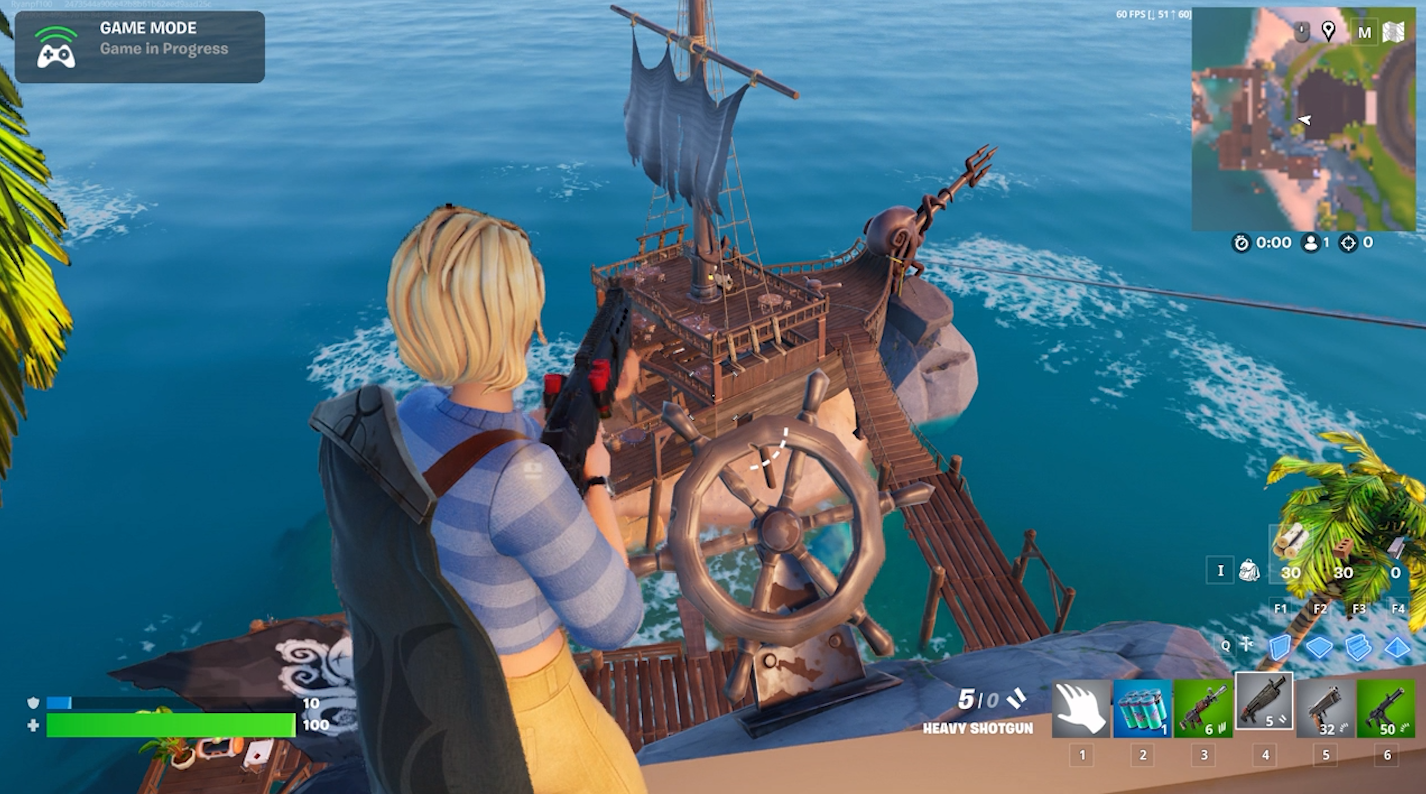
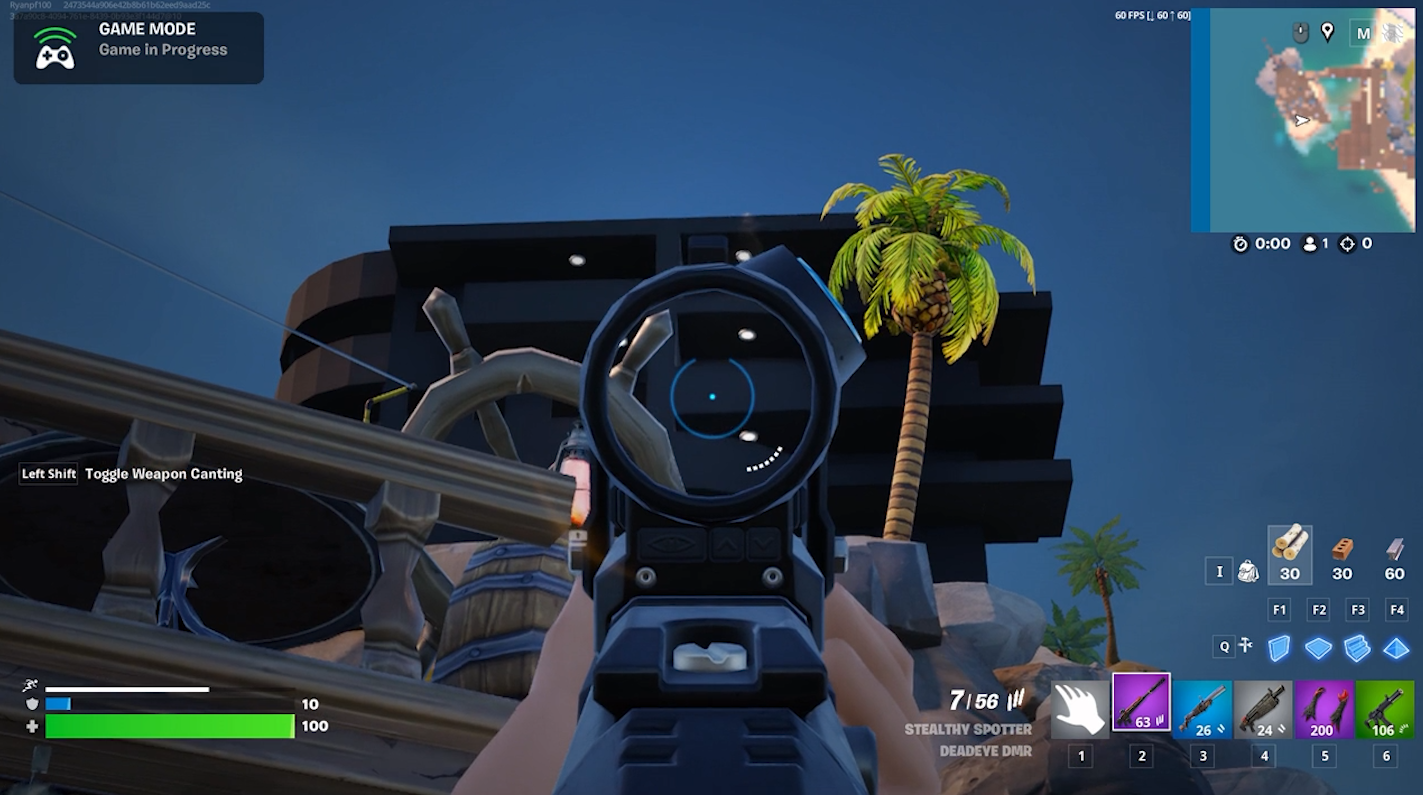
I did my best to give a comprehensive walkthrough of all the possible flanks, interest points, and locations I thought players would find themselves in most.
Overview:
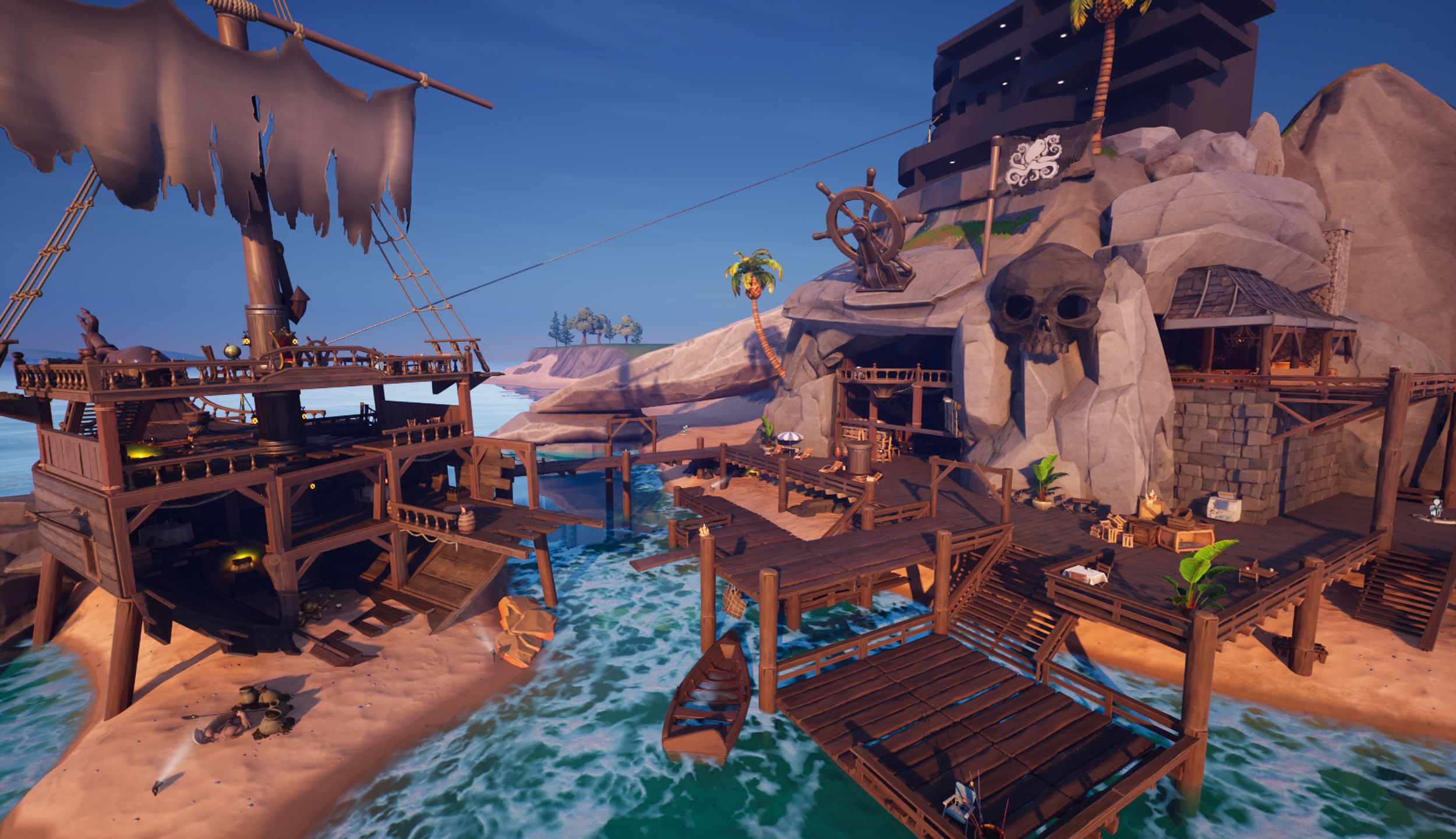
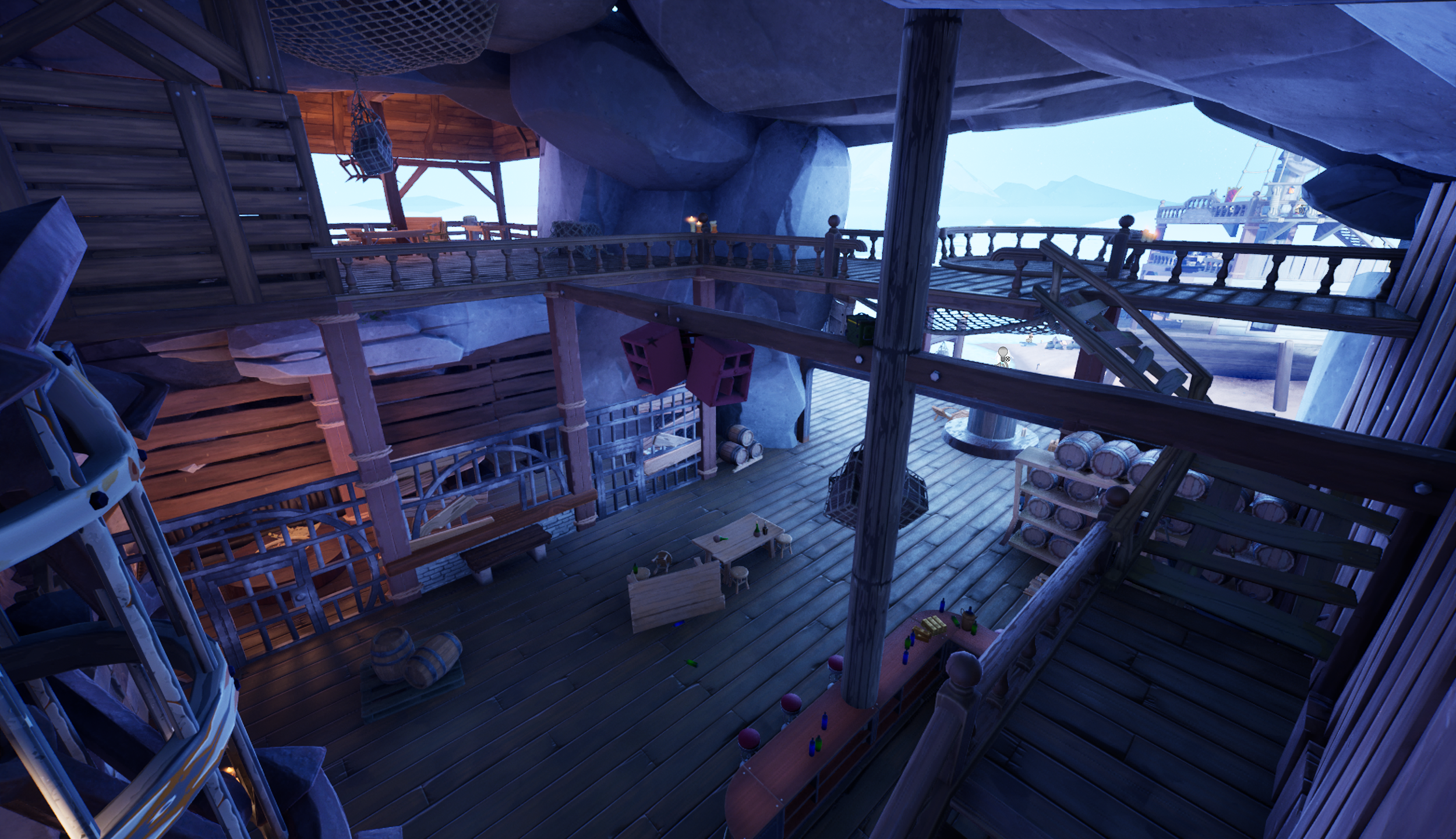
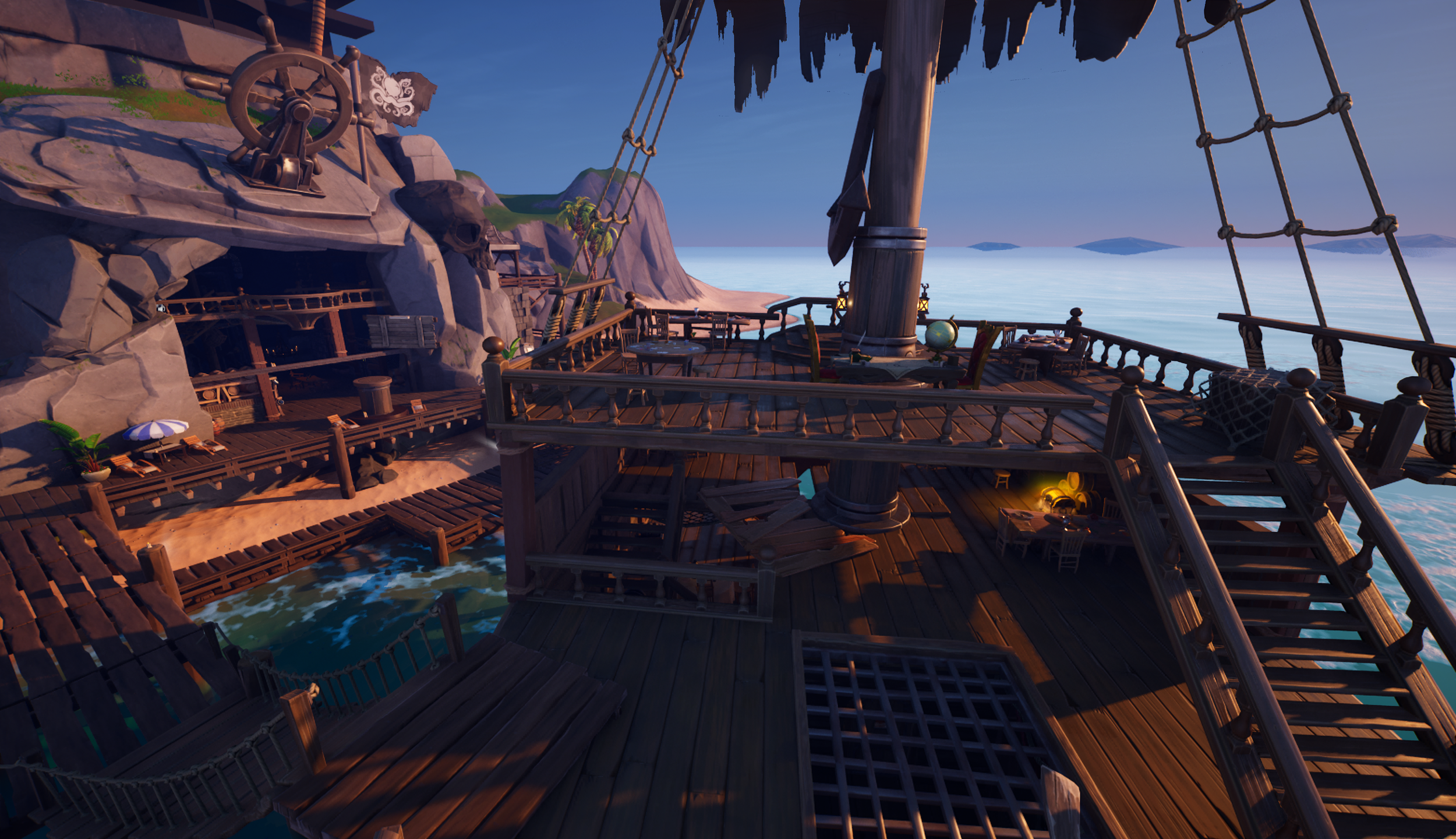
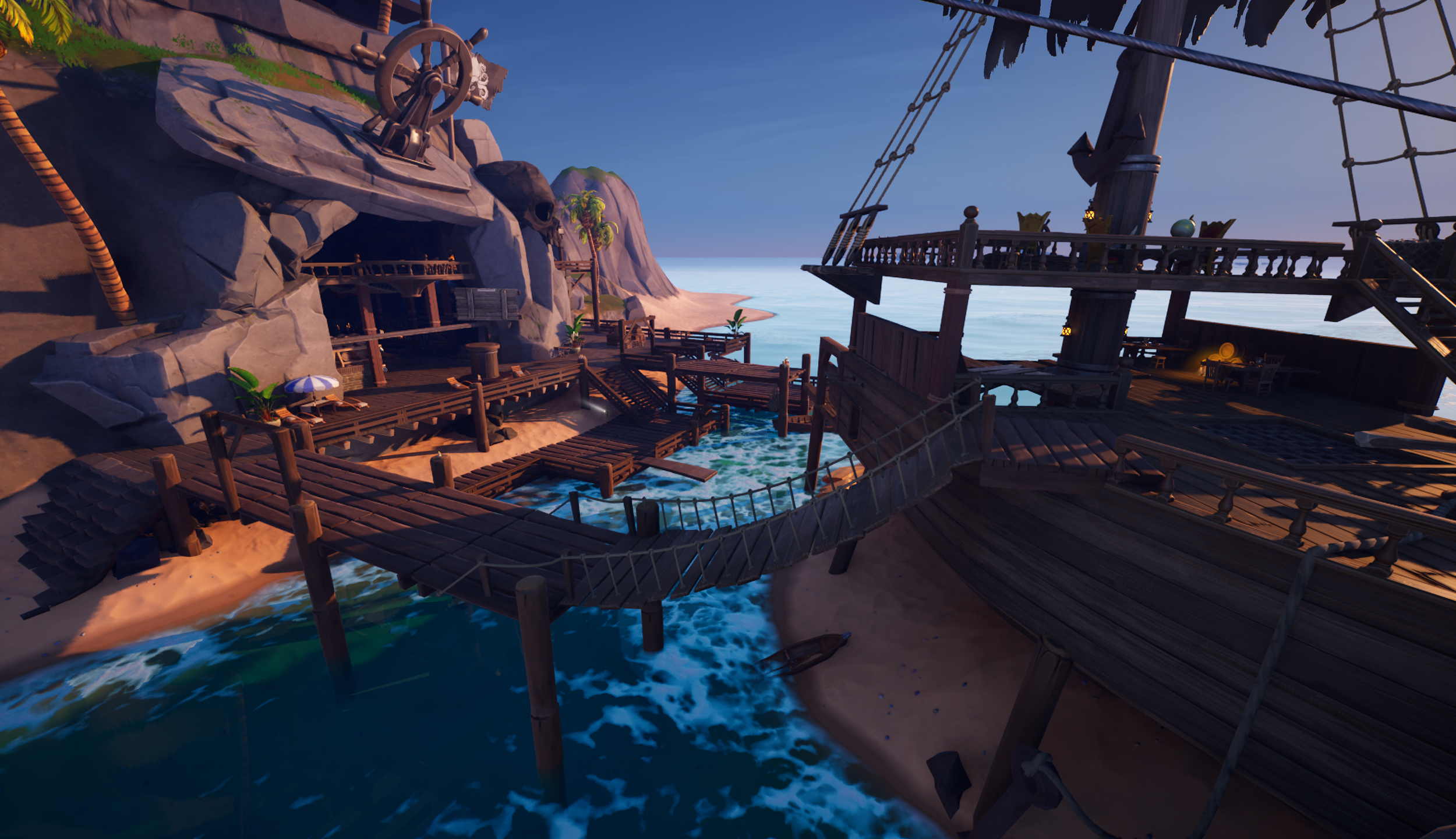
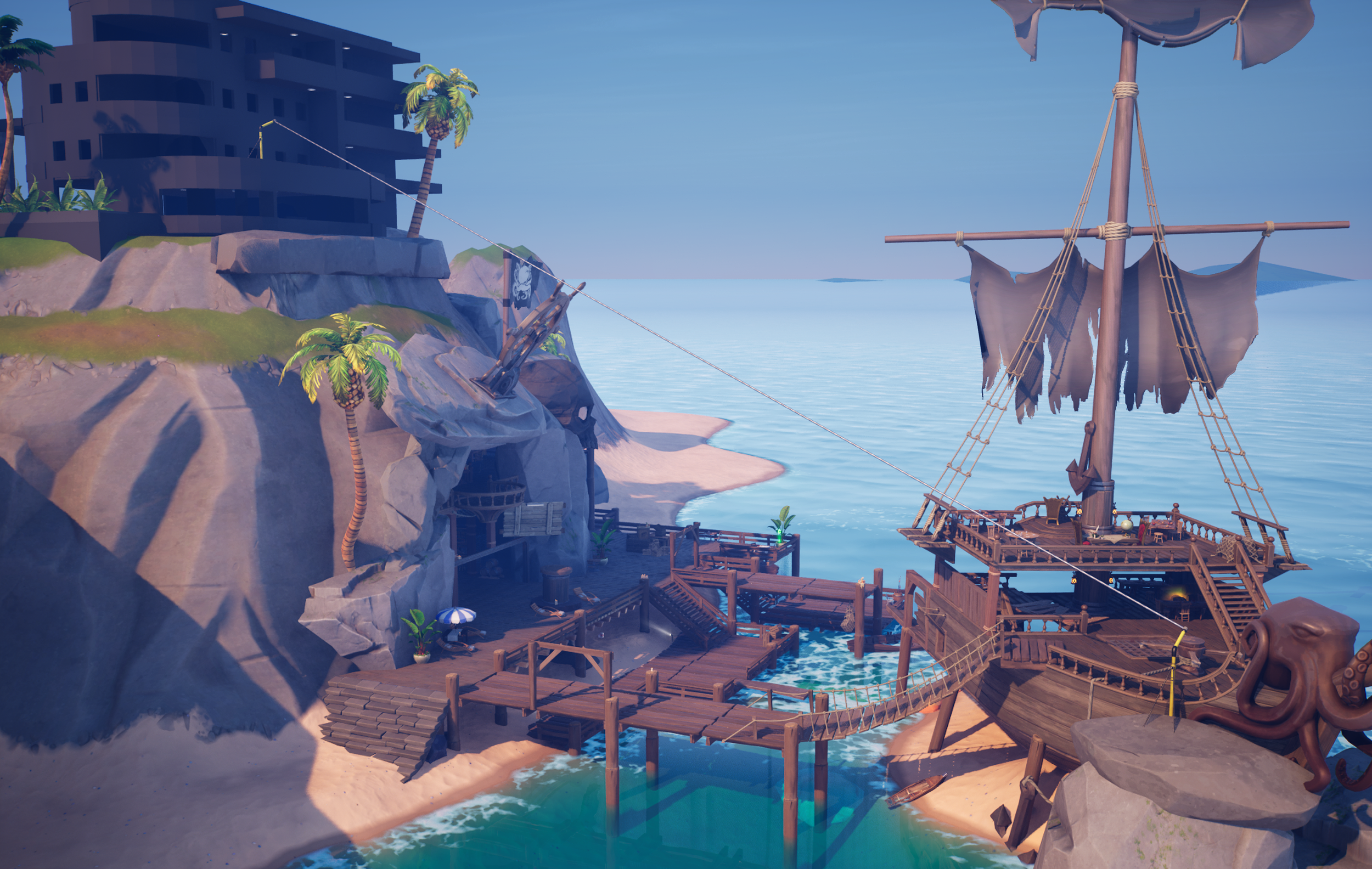
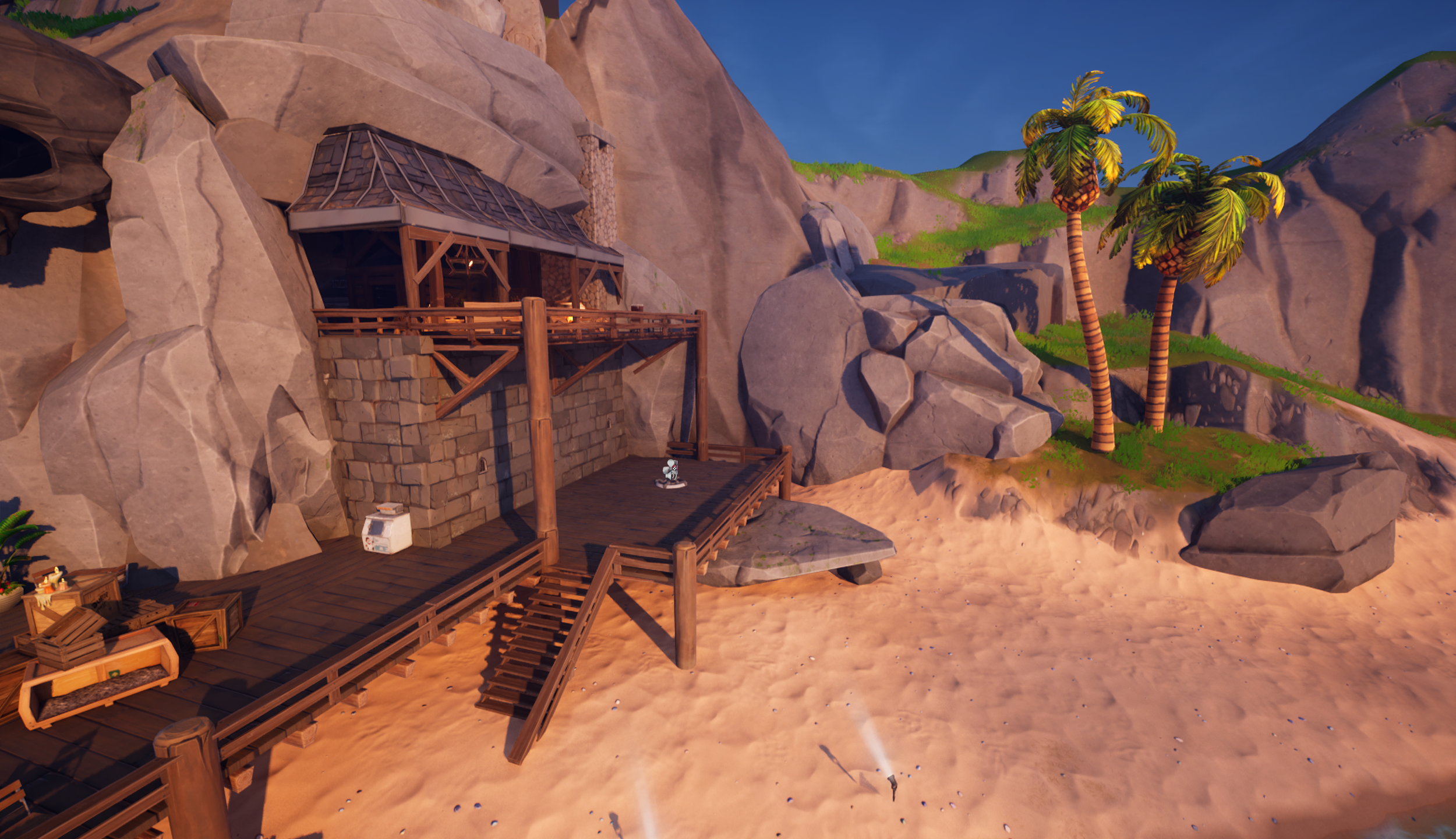
The Scurvy Stack is a compact, high-density coastal POI designed in UEFN that blends strong vertical gameplay with cohesive environmental storytelling. Built into a cliffside, the space is anchored by four distinct areas, each offering its own combat rhythm while feeding into a unified layout:
the Rusty Gull Hotel
Pirate Cove Bar
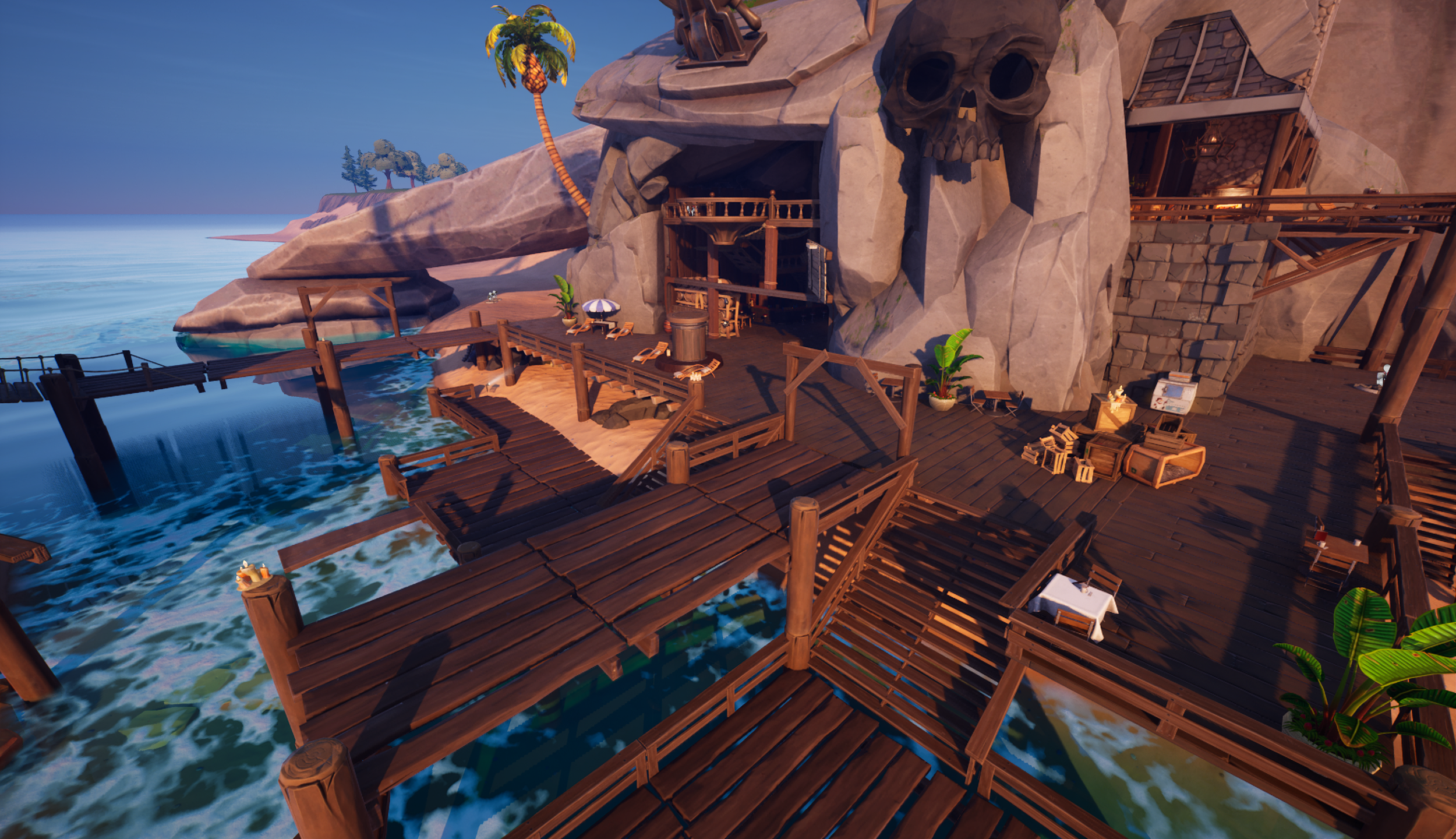
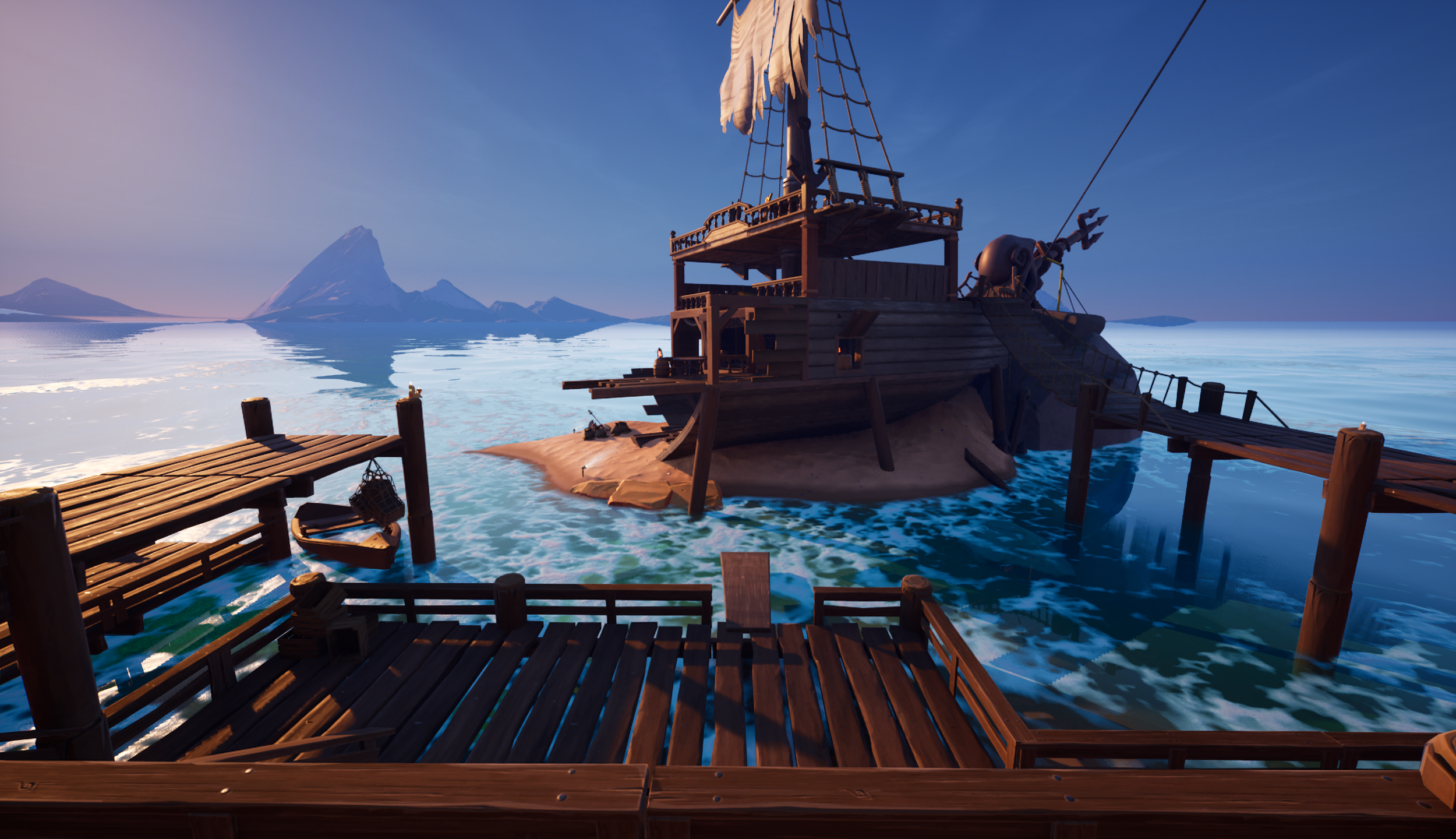
Multi-Tiered Docks
The Salty Duchess Ship Restaurant
The goal was to create a location that feels rewarding to learn over multiple matches, where players can quickly understand the flow but continue discovering new routes, sightlines, and tactical opportunities over time.
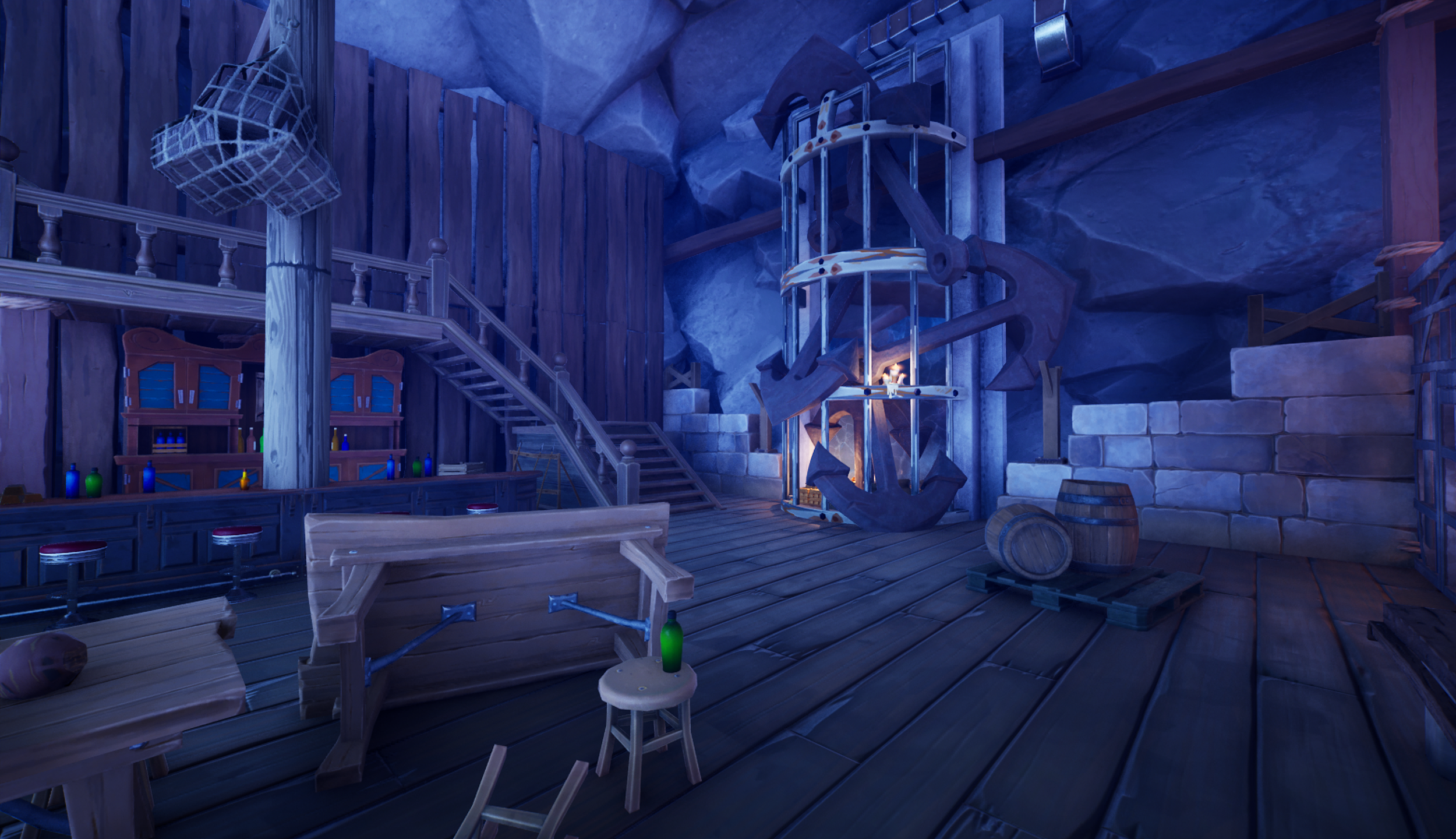
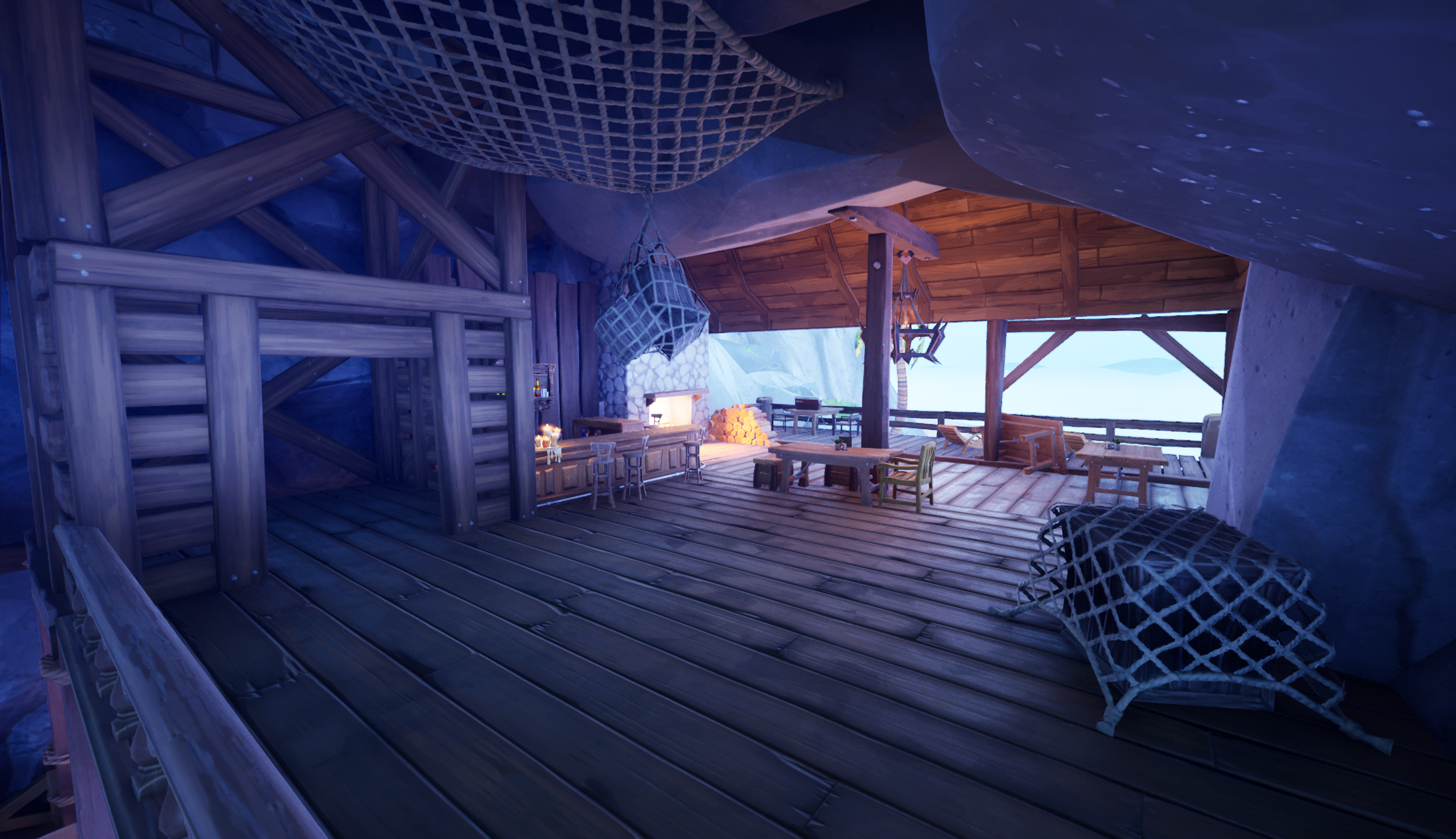
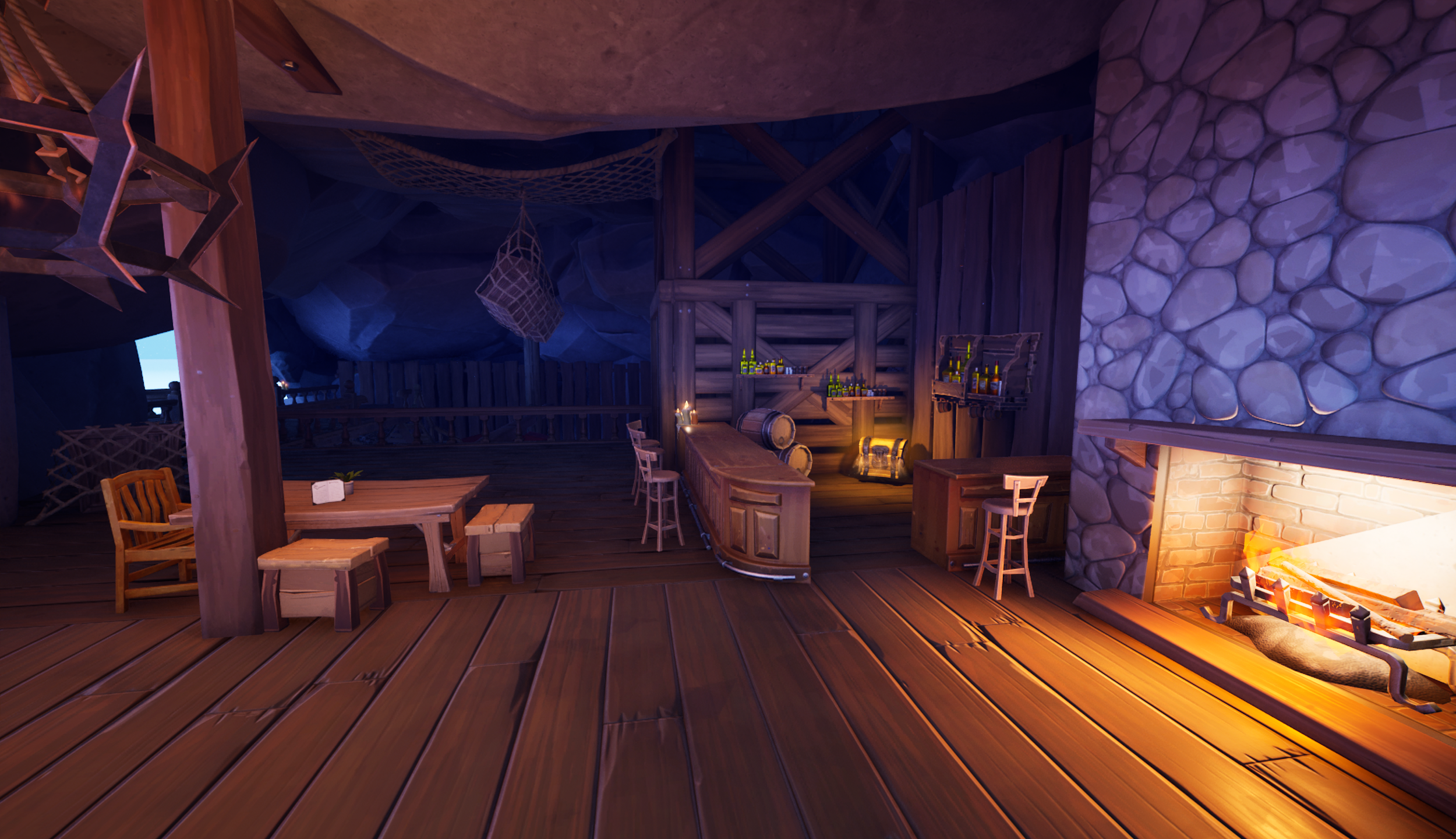
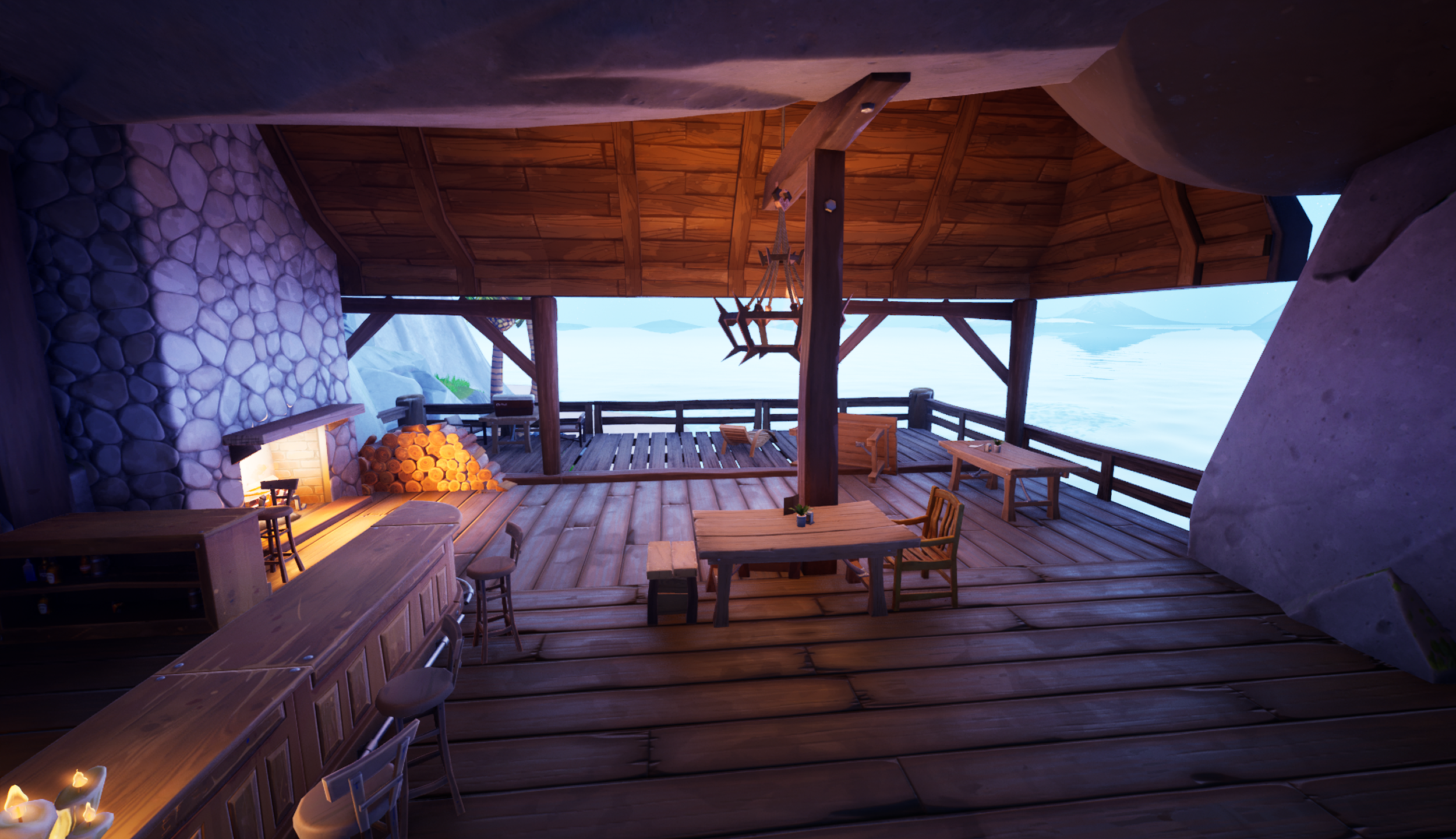
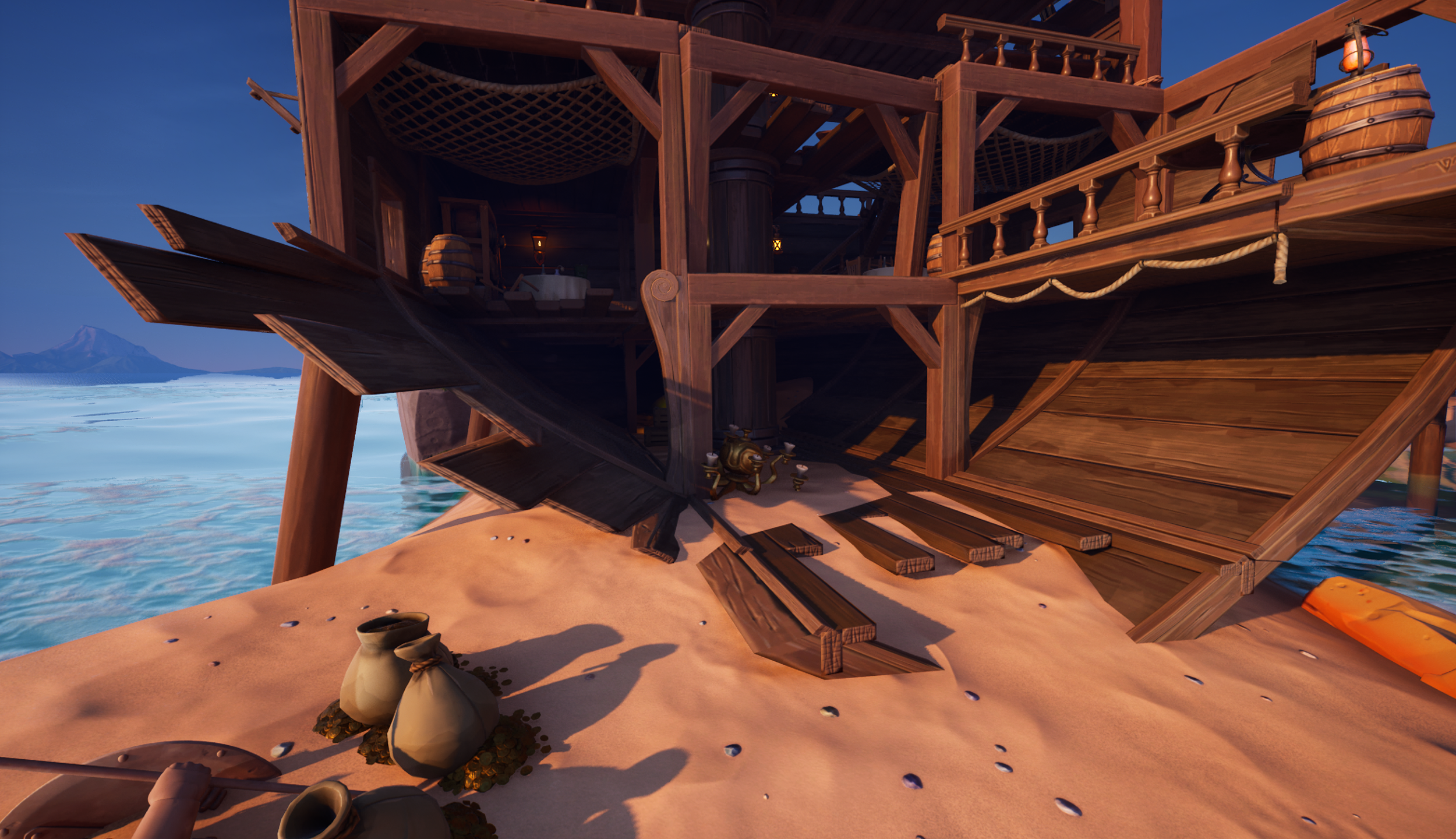
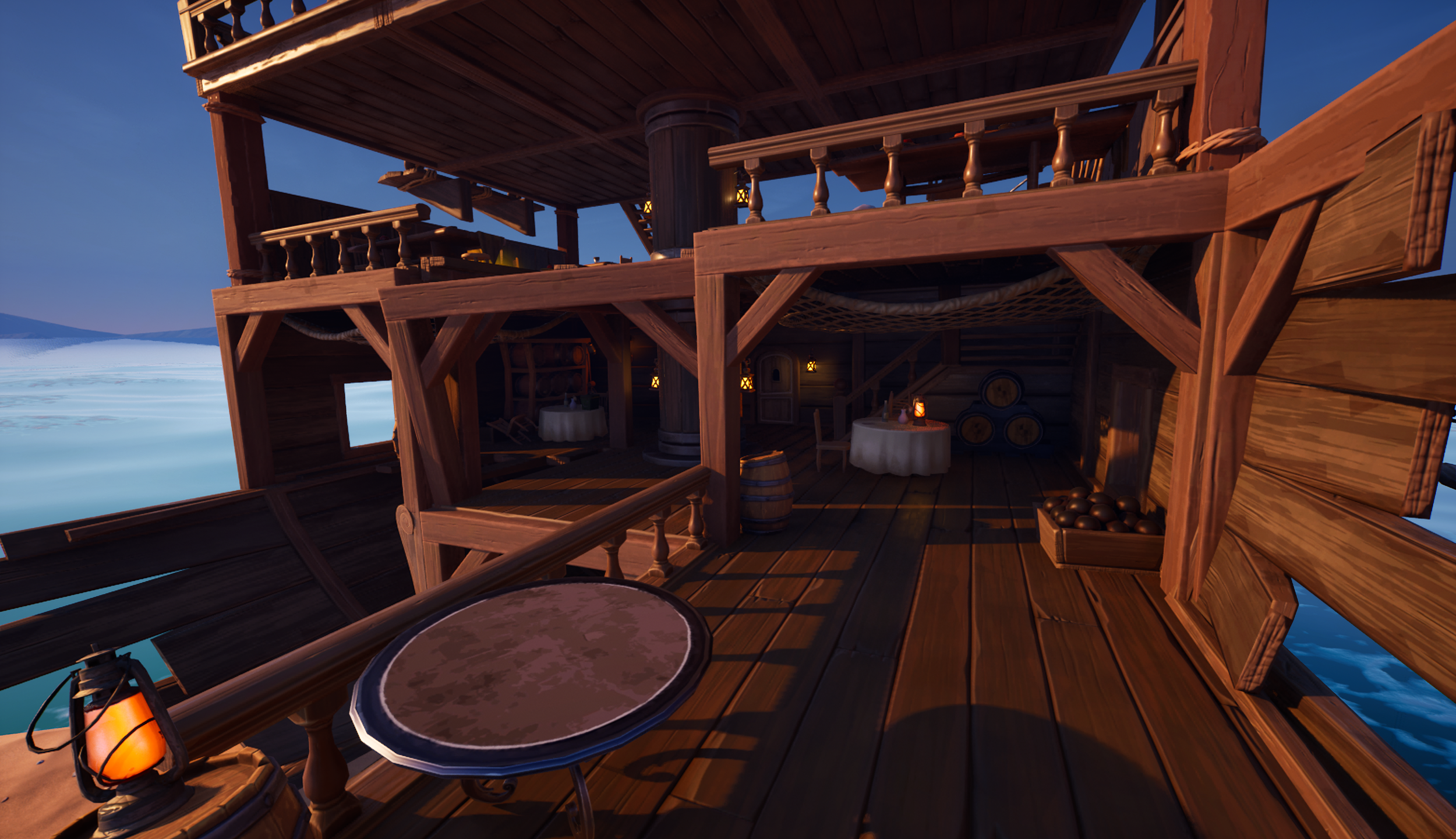
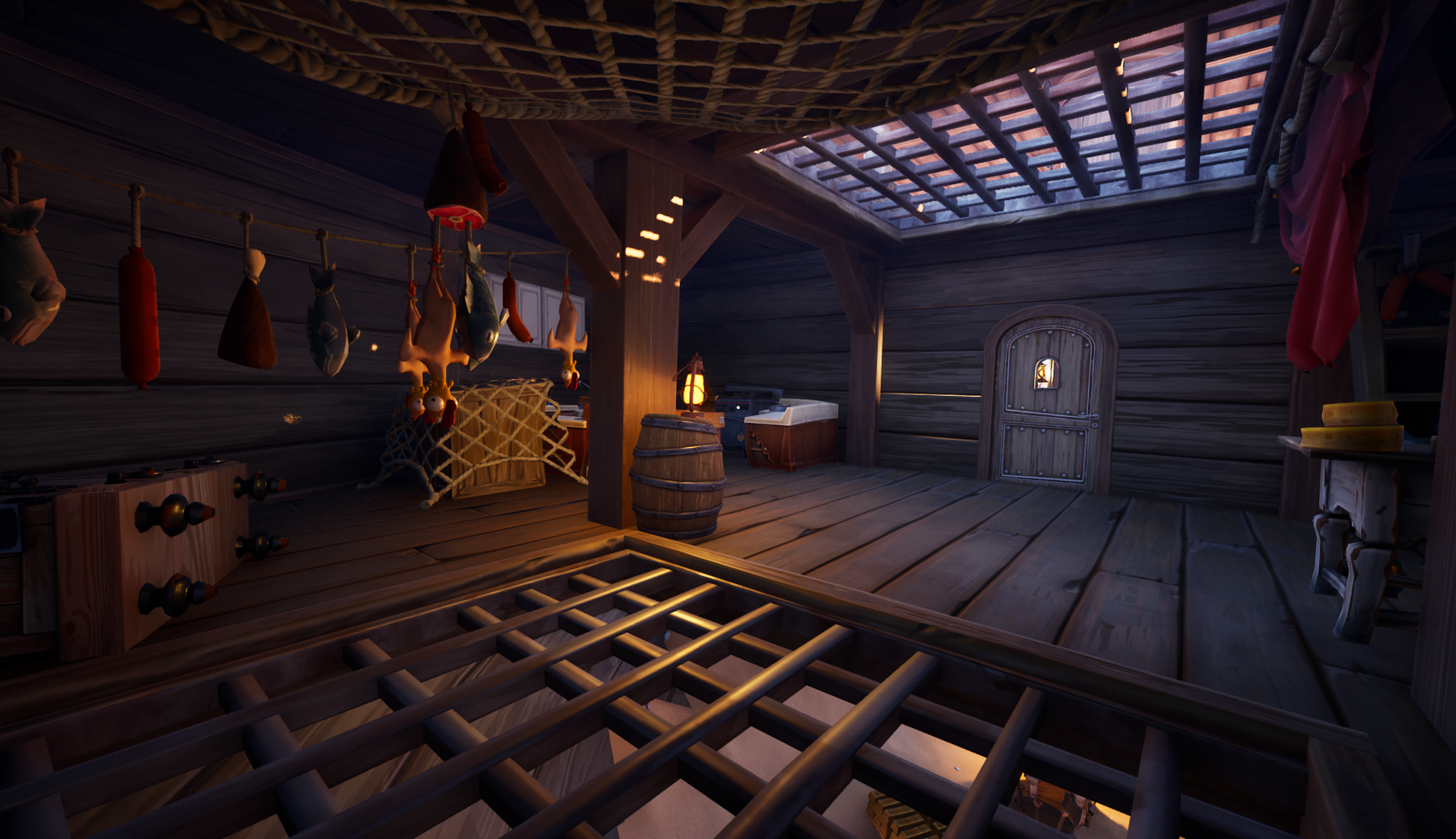
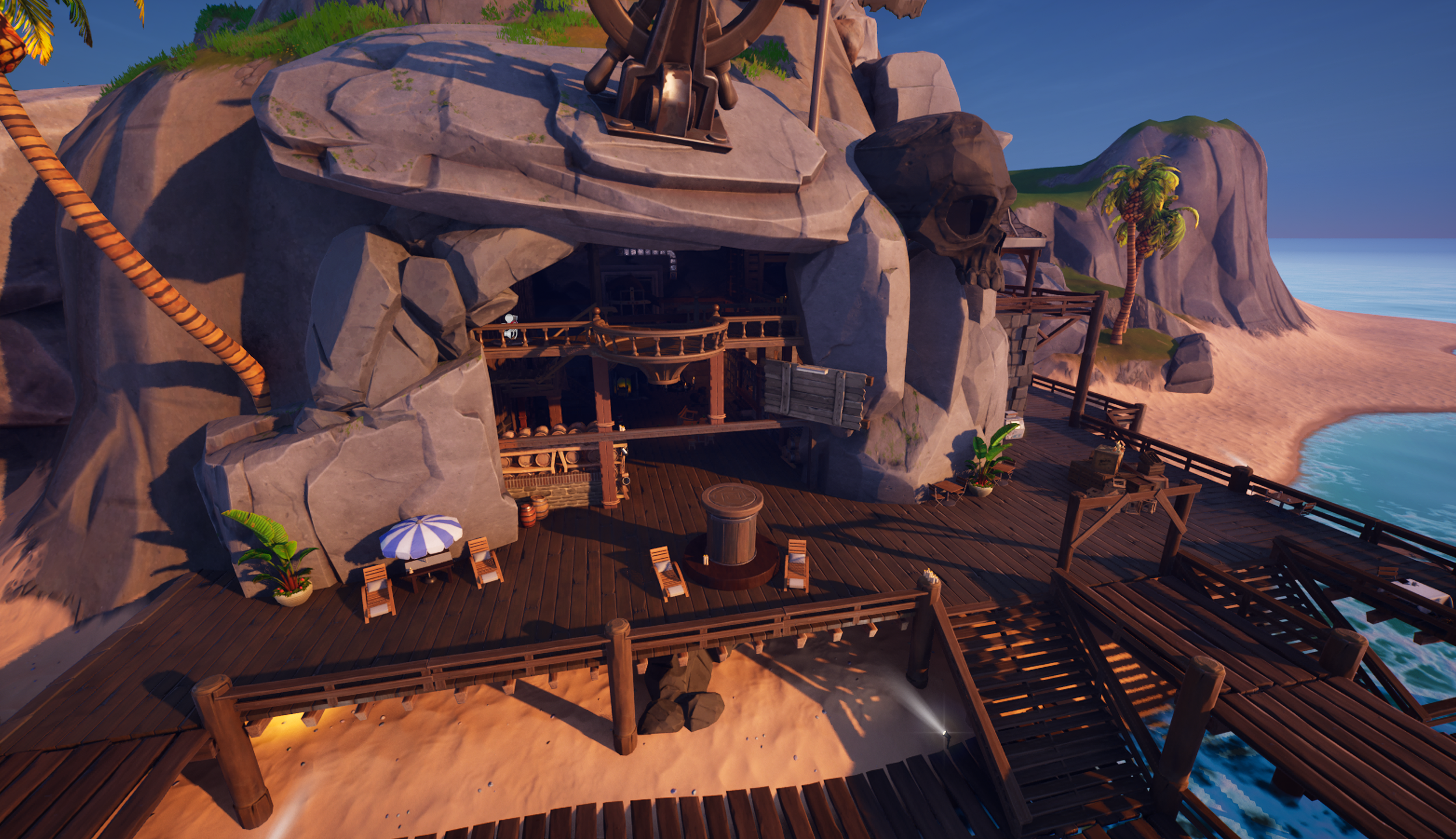
Good Point of Interest (POI) Design:
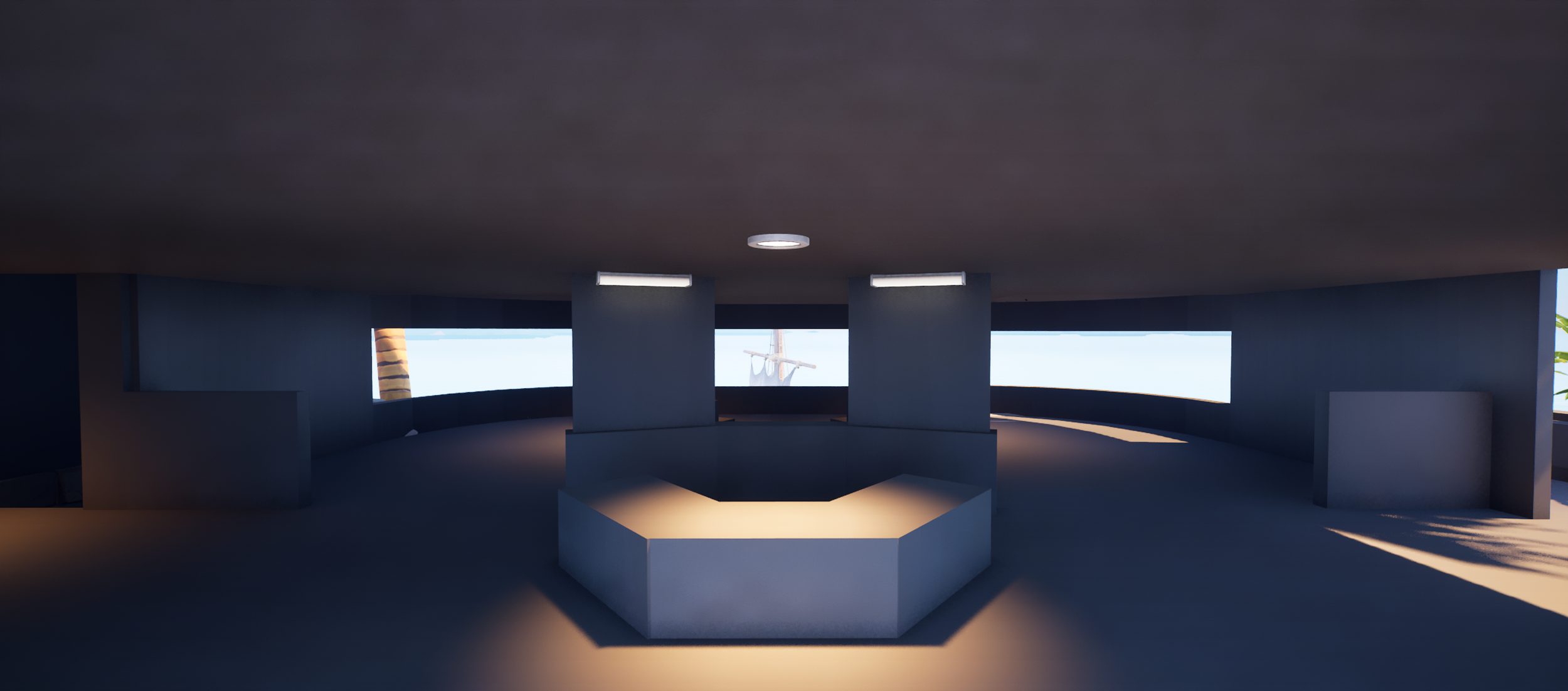
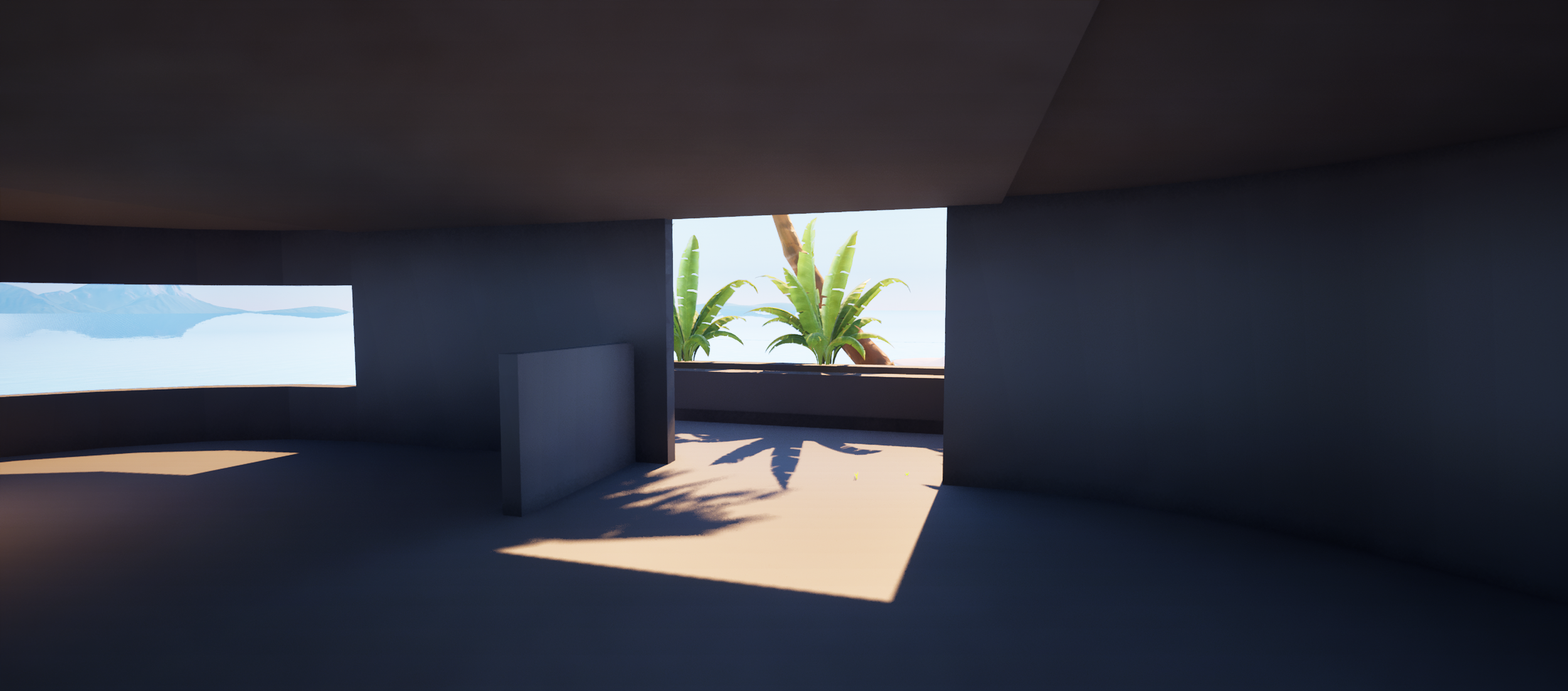
A strong POI needs to be readable on first contact but deep enough to stay interesting, and Scurvy Stack was designed with that balance in mind. Each zone supports a different playstyle. Tight interior fights in the bar, long sightlines from the hotel, layered engagements on the docks, and high-ground control from the ship while maintaining clear visual language so players can orient themselves quickly.
I focused heavily on vertical layering and interconnected paths, ensuring that players always have options for flanking, escaping, or re-engaging. The goal wasn’t just to make a cool location, but to create a space players naturally move through in interesting ways.
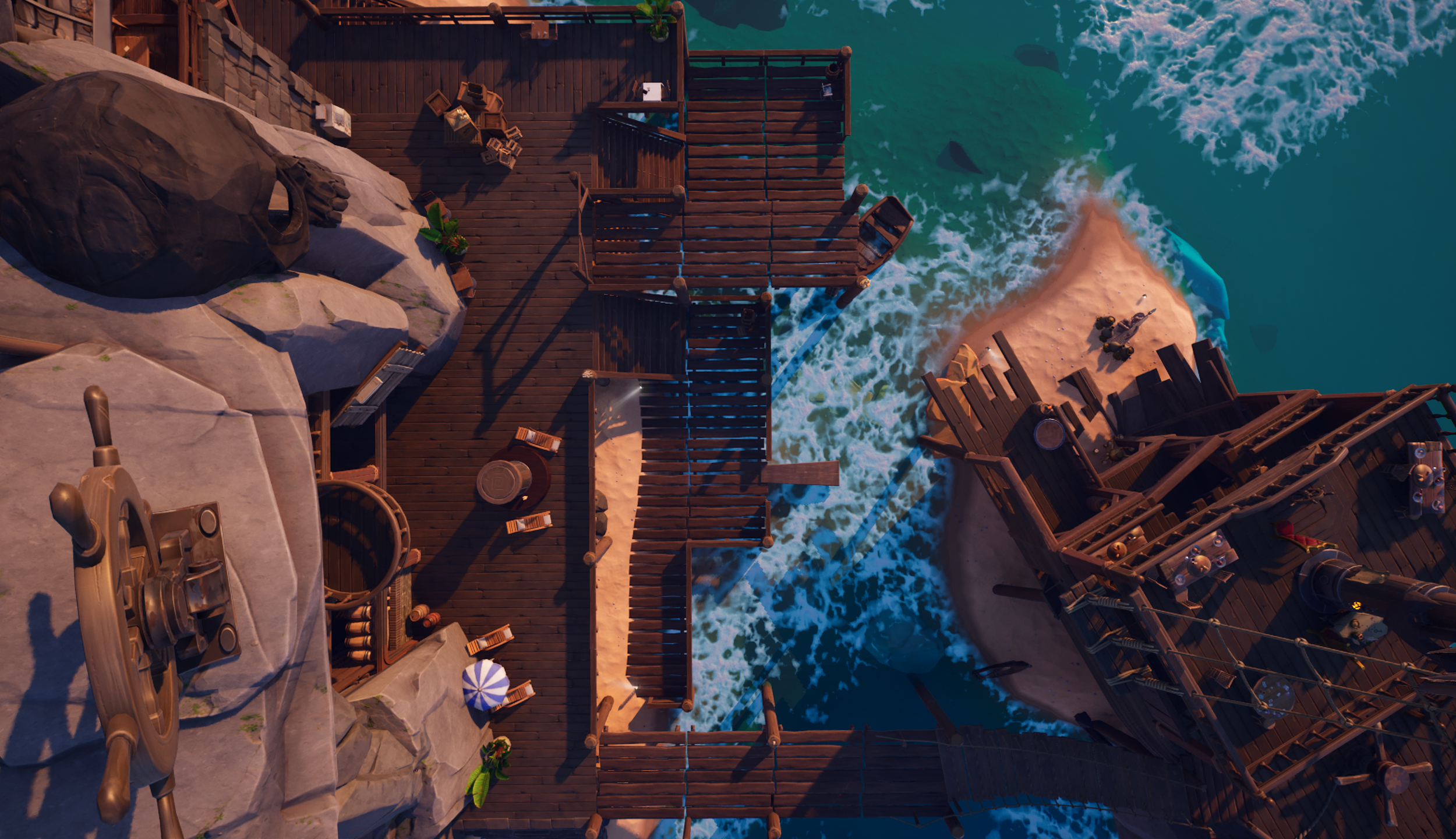
Too much fun:
One challenge I ran into was managing readability within such a dense, vertical space. UEFN makes it easy to build complexity quickly, but that can lead to areas feeling visually noisy or confusing, especially when multiple elevation layers overlap.
Early versions of the POI had strong individual areas, but when combined, players could lose track of where they were or how to rotate effectively, especially during fast-paced fights or storm pressure.
How I worked with that problem:
To address this, I focused on improving visual hierarchy and player guidance without relying on explicit markers. I simplified certain sightlines, adjusted prop density, and used stronger thematic separation between areas so each zone felt immediately identifiable.
I also reinforced key traversal paths by subtly framing them with lighting, structure, and elevation changes, making routes feel natural rather than forced.